We endorse Kam Buckner.
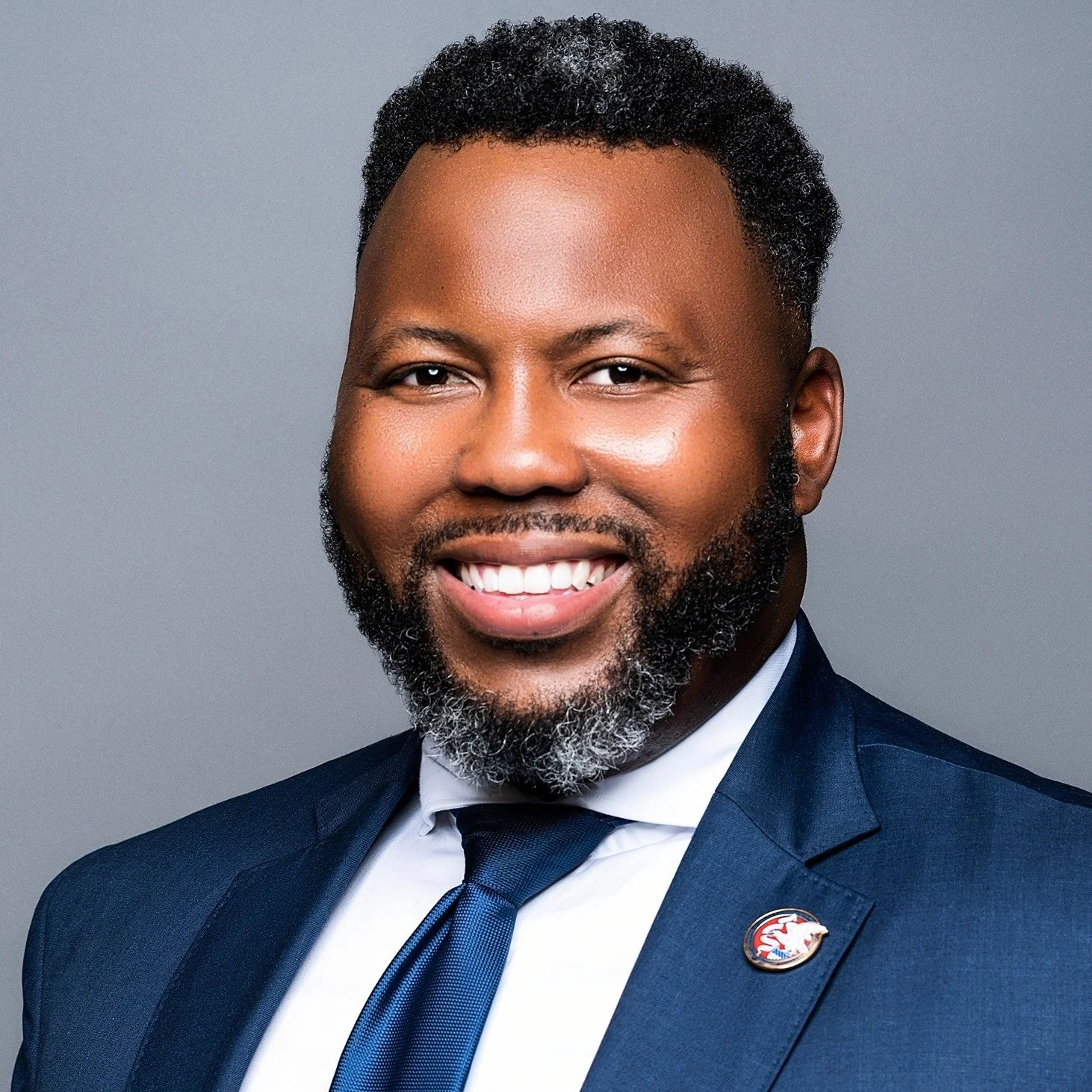
Since 2022, Kam Buckner has become the most vocal elected official for transportation issues in the State of Illinois. He’s unafraid of big ideas and saying it like it is.
We’re so lucky to have a champion like Kam in Springfield, and we are proud to support his re-eleciton.
Read Kam Buckner’s responses to our 2026 questionnaire
What types of transportation do you use during an average week, and how has this shaped your view of transportation policy?
Train, Bus, Bike, Walk and Automobile. Using our systems firsthand shapes how I legislate: I see the delays, the gaps, and the safety concerns, but I also see how essential transit and multi model transportation is for workers, seniors, students, and families. It’s why I push for policies that make transit reliable, safe, and accessible, not just for Chicago, but for every community in Illinois.
Transportation isn’t theoretical for me; it’s lived experience. And it’s clear that when transit works, people’s lives work.
What are some transportation challenges in your district?
My district sits at the center of the state’s transportation contradictions. We have some of the highest-ridership transit corridors in Illinois like the Red Line, the Green Line, Metra’s Electric District , but also some of the biggest gaps in frequency, reliability, and safety.
Bus service is inconsistent, especially along critical routes like 55th, Cottage Grove, and King Drive, where people depend on transit to get to work, school, and medical care. Pedestrian safety is also a constant concern, with dangerous crossings along Lakeshore Drive and the South Lakefront. The pedestrian crossing at Queen’s Landing; the point where thousands of people cross from Grant Park to the lakefront is one that has been a constant struggle; a design flaw that has become a real safety hazard. People have to cross six lanes of DuSable Lake Shore Drive with no grade separation, no real refuge, and heavy, fast-moving traffic.
The Illinois Department of Transportation (“IDOT”) plays a significant role in transportation throughout the state, in Chicago, and Cook County. What is your opinion on their role with the Chicago Department of Transportation, Cook County Department of Transportation and Highways, local communities, and the impact that has?
I believe IDOT has to cooperate more intentionally with CDOT, Cook County DOT, and local communities. Too often, these agencies are operating in silos or parallel instead of as true partners. We see it in delayed approvals for bus lanes on state roads in the city, in mismatched design standards, and in the difficulty communities face when trying to make pedestrian-safety improvements along IDOT corridors.
When IDOT works collaboratively, we get projects with coordinated corridor improvements. When it doesn’t, we get years of stalled safety upgrades, bus delays, and neighborhoods stuck waiting for decisions they don’t control.
How do you view the Illinois General Assembly’s role in setting IDOT’s priorities for public transit, passenger rail, and strengthening accessibility in transportation?
The legislature’s role is to make sure IDOT’s investments reflect the lives people actually live; seniors aging in place, students who need reliable service, workers traveling across regions, and people with disabilities who deserve full and equal access. When the General Assembly sets clear priorities, IDOT follows them. And if IDOT doesn’t, it’s our job to hold them accountable.
States like Colorado, Minnesota, Virginia have passed legislation that has shifted their transportation infrastructure spending towards projects that prioritize safety, transit and cycling, and greenhouse gas mitigation. What’s your position on Illinois’ current transportation infrastructure spending, and if you could change anything, what would it be?
We have made considerable progress, but we still have a way to go and we can get there by committing to a few things:
First, mandate safety and access as core performance measures across IDOT projects. That means engineering streets to protect pedestrians and cyclists, fixing dangerous state corridors like Irving Park that cut through neighborhoods, and redesigning crossings like Queen’s Landing where lives are literally at risk. I’ve already pushed IDOT in this direction through oversight hearings and legislation that prioritizes safety on state roads.
Second, shift more resources into transit, rail, paratransit, and regional coordination. Through our recent transit reform package, I helped create the Interagency Coordinating Committee on Transit Innovation so IDOT, RTA, Metra, CTA, Pace, and local partners finally work from the same playbook. I also led efforts to remove IDOT barriers that have slowed or blocked bus lanes on state roads in Chicago.
Third, plan and invest with climate impact in mind. We should be measuring greenhouse gas reductions the same way other states do, as part of transportation decision-making. That means funding electrified buses, supporting transit-oriented development, and expanding passenger rail to cities like Rockford, the Quad Cities, and Peoria, which is something I’ve specifically championed.
This fall, the Illinois General Assembly passed a historic investment in transit operations – as well as significant governance reforms in the establishment of the Northern Illinois Transit Authority. How do you view the Assembly’s role in ensuring both the short- and long-term success of this legislation?
Passing the bill was the easy part. Now the work begins. Thank you for all of your help!
What is your position on investing to expand passenger rail service in Illinois, including the development of high-speed rail?
I’m strongly in favor of expanding passenger rail in Illinois, including laying the groundwork for high speed rail. Rail is not a luxury, it’s an economic engine. It connects downstate cities to Chicago’s job market, strengthens our universities, supports tourism, and gives residents real alternatives to driving. We’re already making progress with new service to Rockford and the Quad Cities. The next step is to build a true statewide rail network that links Peoria, Champaign, Carbondale, Springfield, Bloomington, and Decatur with fast, reliable service. And yes, Illinois should keep building toward higher speed rail in the immediate and eventually high speed rail, because the long-term economic return is enormous.
Federal funding for Illinois transportation projects – such as the Red Line Extension and Red-Purple Modernization projects – has come under threat from the Trump administration. How can legislators shore up funding for critical infrastructure projects under a hostile federal climate?
Protect the projects already in the pipeline, diversify our funding sources, and make those projects politically impossible to cut. We have to continue to prove that transit works and its a good bet for anyone no matter what your political ideology is,.
Read Kam Buckner’s (IL House District 26) responses to our 2024 questionnaire
What types of transportation do you use during an average week, and how has this shaped your view of transportation policy?
I am an avid rider of CTA and a cyclist. Because I understand the mass transit system and the issues around street safety for pedestrians and cyclists, I’ve been a staunch advocate for safe streets policy.
What are some transportation challenges in your district?
Lack of protected bike lanes, infrastructure that makes traffic violence easier to occur, lack of connectivity between CTA and Metra, not enough focus on Transit Oriented Development, an unimaginative DLSD.
How can the State of Illinois address the impending combined $700 million fiscal cliff facing the CTA, Metra, and Pace in a way that ensures sustained and adequate funding for the future?
Reform first, then revenue. We have to take a serious look at the fare box ratio and the fact that both state and federal governments have intentionally underfunded transit and put parameters in place to change that. We also need to have a real look at governance and accountability measures.
A federal rule allows for states to flex up to 50% of federal highway funds towards transit instead. New Jersey currently flexes 15%, and California flexes 12% compared to Illinois at just under 3%. Would you make any changes to this amount, and if so why?
California, New Jersey, New York, and Virginia have shown a commitment to transit by flexing FTA funds for transit projects. Illinois is behind the 8 ball. If we want better systems we need to commit to them.
The Illinois Department of Transportation (“IDOT”) plays a significant role in transportation throughout the state and in Chicago. What is your opinion on their relationship with the Chicago Department of Transportation, local communities, and the impact that has?
Both agencies need to be doing much more to not perpetuate a car centric approach to transportation. They have not been bold or creative and because of it we have antiquated and dangerous streets.
How do you view the Illinois General Assembly’s role in setting IDOT’s priorities for public transit, passenger rail, and strengthening accessibility in transportation?
The legislature needs to take a more aggressive role in setting the policy direction for IDOT and I have led the charge on that.
What is your position on IDOT’s current proposals for rebuilding North Du Sable Lake Shore Drive?
They are sad. We deserve better. I have also led the charge to change this.